
A granny flat is one of the most practical ways to get more from your property.
For some families it’s about keeping parents or adult children close while maintaining independence. For others it’s about generating rental income from a block they already own. Either way, the first question is always the same: is it feasible on my property?
That’s where we start. Before any design work begins, we review your site against the planning rules and confirm what’s possible. It saves time, avoids wasted spend, and gives you a clear picture of what you’re working with before committing to anything.
A secondary dwelling, commonly known as a granny flat, is a self-contained residence on the same lot as a principal dwelling. It has its own living area, kitchen, bathroom, and bedroom, and can be attached to the main home or built as a separate detached structure.
Detached granny flats generally offer the best outcome for both privacy and approval. A separate structure with its own entry means genuine independence for whoever is living there, and the approval pathway under complying development is typically more straightforward.
The NSW State Environmental Planning Policy (Affordable Rental Housing) 2009 actively encourages secondary dwellings by allowing them to be approved as complying developments across all residential zones, with clear standards for what qualifies.
CDC is the faster pathway for granny flats that meet the set standards. Assessment is handled by a private certifier rather than council, which significantly reduces timeframes. To qualify, the proposal must meet all prescriptive requirements including lot size, setbacks, floor area, and height. If a single standard is not met, the project cannot be approved under CDC and will need to go through a DA instead.
If the site or proposal does not meet CDC requirements, a DA through council is required. The DA pathway allows for more flexibility, including the ability to justify non-compliances on merit. Timeframes are longer, but for sites with constraints it is often the only viable path. We assess this at the concept stage, so you know what you are working with from the start.
Services for a secondary dwelling project typically covers:
A granny flat needs to function as a complete home in a compact footprint. A few things we focus on:
Every square metre is valuable in a smaller dwelling. We design layouts that feel open and liveable rather than cramped, with storage and flow considered from the start.
For detached structures, we consider the relationship between the granny flat and the main dwelling, including window placement and outdoor areas, so both households have genuine privacy.
Living spaces are positioned to make the most of northerly sunlight where possible, with window sizing and shading considered to improve comfort and reduce energy costs.
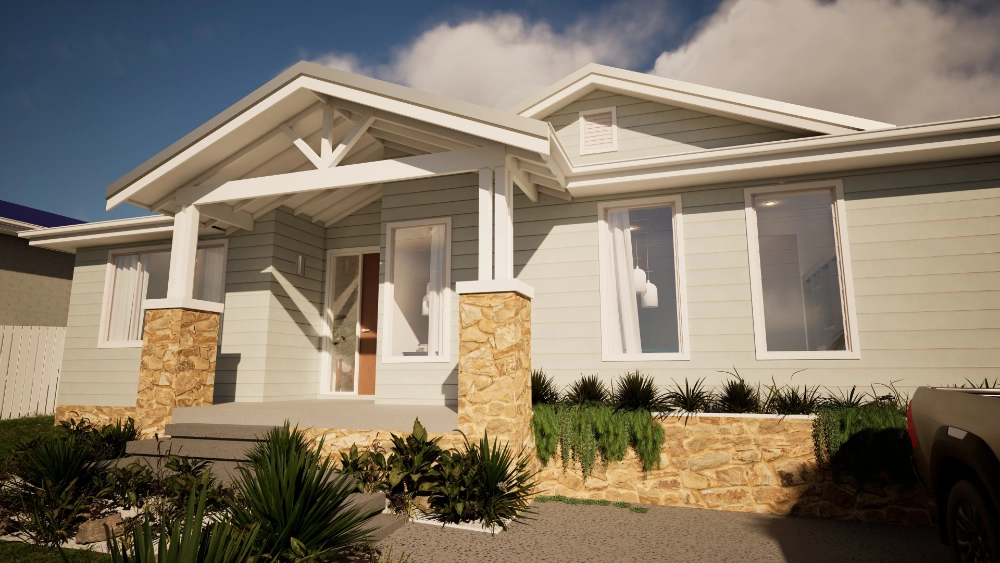
The granny flat should look like it belongs on the property. We design to complement the existing home in materials, form, and roof pitch where practical.
Navigating approvals, coordinating consultants, and producing construction-ready documentation is a lot to manage alongside everything else. We handle the process from the first feasibility check through to lodgement, so you’re not chasing reports, following up certifiers, or trying to work out what comes next. You stay across the decisions that matter. We take care of the rest.